

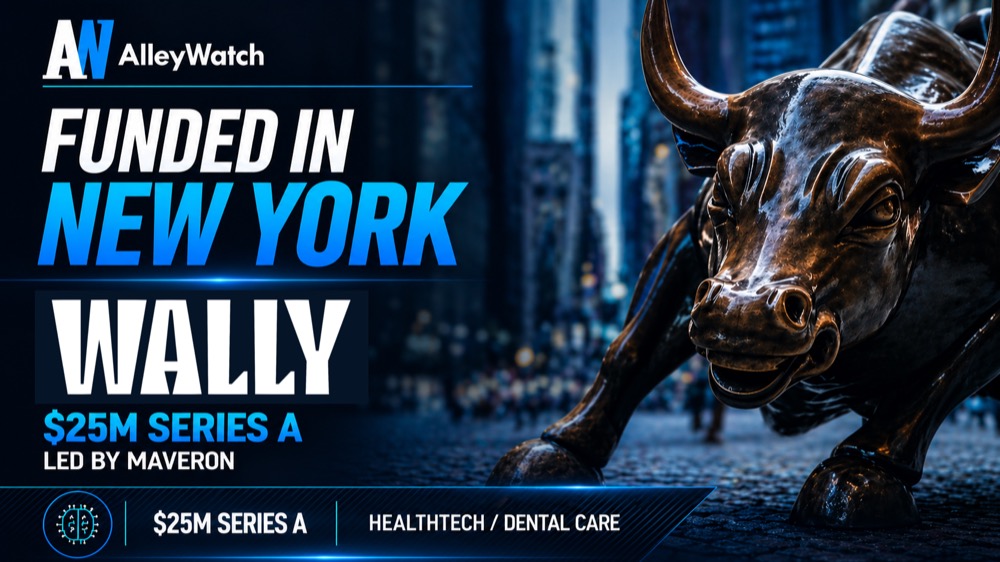
American dentistry pays practices to repair decay, so the industry has little reason to prevent it, and insurance reimbursement rules and private equity consolidation push that incentive even harder. The result is a system where only 40% of U.S. adults see a dentist each year, even though more than 80% say they want more care, because visits bring surprise bills, rushed appointments, and the discomfort of metal scraping. Wally answers that gap with a $249 annual membership that covers unlimited cleanings, exams, diagnostics, and whitening, and it takes insurance out of the equation entirely. The company builds its clinics inside co-working spaces instead of standalone dental offices, which lets it open a location in weeks, and a proprietary AI platform runs scheduling and operations while it guides clinicians through each appointment. Swiss AIRFLOW cleaning technology replaces metal scraping and cuts visit times by about half, while digital X-rays, 3D scans, and AI detection show members their own health data. Members rate Wally 4.9 stars and visit three times a year on average, and the company, which now counts more than 50,000 members across New York, New Jersey, Pennsylvania, and Illinois, plans to grow from 15 locations to 100 by the end of 2027.
AlleyWatch sat down with Wally cofounder and CEO Tyler Burnett to learn more about the business, its future plans, recent funding round that brings the company’s total funding raised to $28.1M, and much, much more…
Who were your investors and how much did you raise?
We raised a $25M Series A led by Maveron with participation from Bling Capital as well as notable angel investors, including Jack Abraham, the cofounder of Hims.
Tell us about the product or service that Wally offers.
Wally is a preventative, subscription-based oral healthcare membership. For $249 a year, our members get unlimited cleanings and advanced diagnostics without the hassle of traditional insurance. We use Swiss AIRFLOW technology which eliminates harmful bacteria and stains without any of the painful metal scraping.
On top of that, we utilize digital X-rays, 3D intraoral scans, and AI-powered detection so patients can actually see their objective health data. We also offer popular procedures and services including non-invasive cavity reversal, aligners, and custom nightguards at a fraction of the cost of traditional competitors.
What inspired the start of Wally?
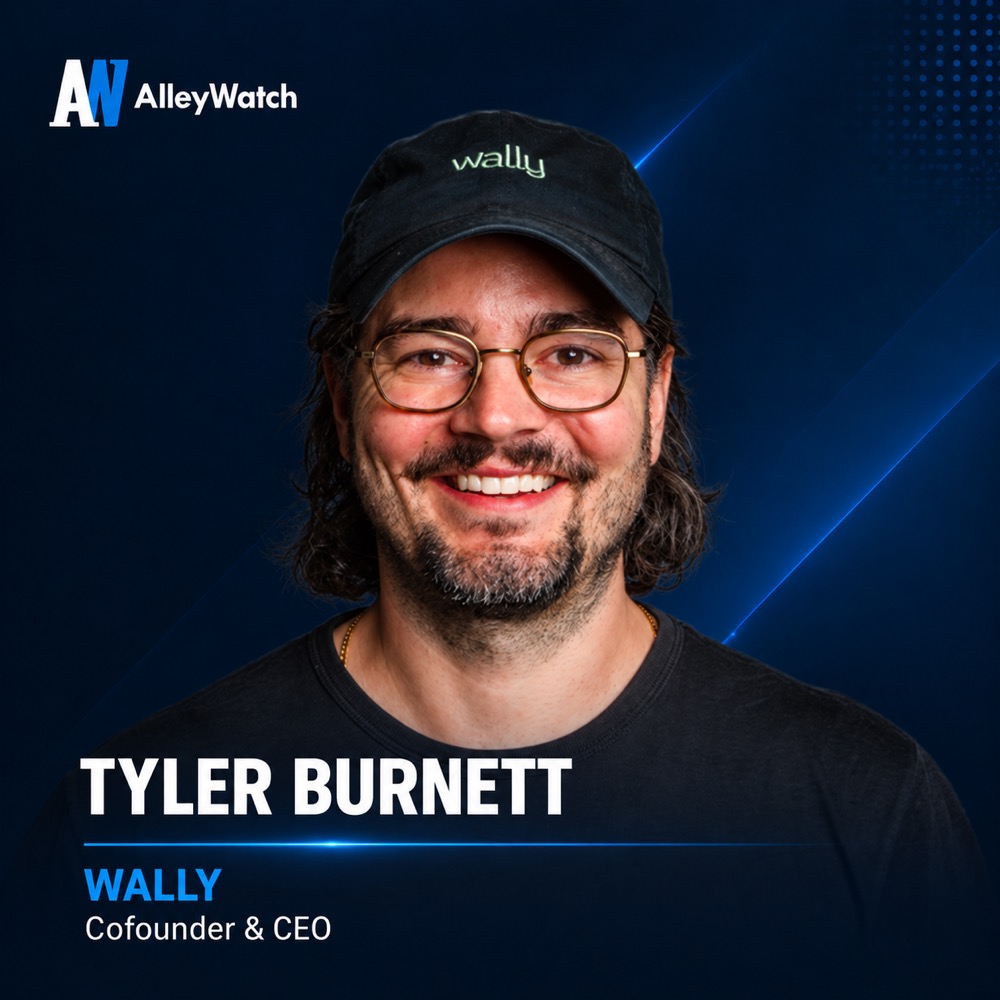 The inspiration came from a mix of personal frustration and inside perspective.
Years ago, after moving from Canada to the US, I went to a new dentist who told me I needed eight cavities filled. I went out and got second and third opinions and learned that seven of those recommended fillings were entirely unnecessary. Around the same time, I was dating my now-wife, who was a recent dental school graduate, so I got an inside look at how the industry operates.
My cofounders, Stipe Latkovic and Chelsea Patel, and I realized that the U.S. dental system was fundamentally trapped in an insurance model that forces practices to maximize reimbursements rather than focus on patient health. We wanted to build a company that profits from preventing decay, rather than fixing it.
How is Wally different?
We take insurance completely out of the equation. Traditional dentistry runs on a reactive model: get someone in the chair, find something to fix, and bill the insurance. Wally is entirely proactive and transparent. By charging a flat membership fee, we align our incentives with the patient’s actual health. Furthermore, we locate our studios in co-working spaces for ultimate convenience and use a proprietary AI platform to guide clinicians through every appointment, which takes the operational burden off of our dental professionals. That’s a huge reason why we have a 97% hygienist retention rate.
What market does Wally target and how big is it?
We target the US dental market which is worth close to $200B. Right now, only 40% of American adults visit the dentist each year. The crazy part is that over 80% of people actually want more dental care, but they stay away because traditional visits are financially complex and physically uncomfortable. We are targeting that massive group of Americans who are tired of surprise bills, insurance bureaucracy, and the anxiety of the dental chair.
What’s your business model?
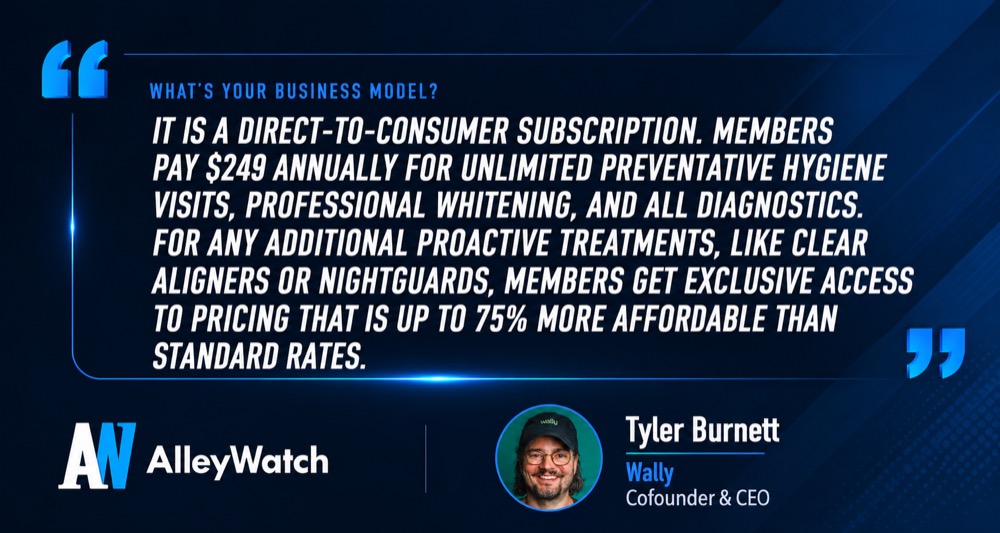
It is a direct-to-consumer subscription. Members pay $249 annually for unlimited preventative hygiene visits, professional whitening, and all diagnostics. For any additional proactive treatments, like clear aligners or nightguards, members get exclusive access to pricing that is up to 75% more affordable than standard rates.
How are you preparing for a potential economic slowdown?
In an economic slowdown, consumers aggressively look for value, predictability, and price transparency. Our model is naturally insulated against a downturn because $249 a year is often cheaper than standard dental insurance premiums and copays. By eliminating surprise bills and expensive, unnecessary invasive procedures, we are providing a highly cost-effective way for people to maintain their health when household budgets tighten.
What was the funding process like?
It was both easy and hard.
Building a nationwide consumer brand in dentistry is incredibly difficult due to the insurance monopoly and fragmentation in the industry. It’s never been done before.
We had to prove to investors that our vision, business model, technology, and traction is all real and ready for expansion.
Thankfully, we had strong data to bring to the table. Surpassing 50,000 members who visit us three times a year on average, alongside our 4.9-star rating, showed investors that we had hit a nerve in the market.
What are the biggest challenges that you faced while raising capital?
The biggest challenge was overcoming the initial skepticism that consumers would pay out-of-pocket for a dental membership when many technically already have some form of dental insurance.
We had to educate the market on the fact that traditional dental insurance functions more like a discount plan for emergencies rather than true healthcare. Once investors saw how much patients loved the pain-free experience and transparent pricing, that skepticism vanished.
What factors about your business led your investors to write the check?
Our lead investor Jason Stoffer at Maveron said it best: “Wally does something no one else in dental has pulled off: pain-free cleanings in half the time, on a single AI-driven platform that runs scheduling, operations, and guides clinicians through every appointment. Dentistry hasn’t had a consumer brand people actually like. We think Wally is that brand, and the hardware, diagnostics, and AI behind it are what make it durable.”
What are the milestones you plan to achieve in the next six months?
Over the next six months, we are establishing waitlists and laying the groundwork to bring our subscription model to key new metropolitan hubs: Washington DC, Atlanta, Austin, and Miami. To do this, we will be hiring aggressively across the board, bringing on top-tier clinicians and operational leaders to help power our expansion.
What advice can you offer companies in New York that do not have a fresh injection of capital in the bank?
New York is an incredible place to build because you have access to a massive, diverse population of people who are not afraid to give you very direct, unfiltered feedback. If you are operating without fresh capital, lean into that. Talk to your customers obsessively, iterate based on their blunt feedback, and focus relentlessly on your core unit economics. Prove that your product works organically before you worry about scaling it artificially.
Where do you see the company going now over the near term?
Our near-term goal is scaling our footprint. We currently have 15 locations across New York City, Philadelphia, Jersey City, and Chicago. With this new capital, we plan to expand to 100 locations by the end of 2027. We want to bring this technology-driven, proactive oral care experience to as many people as possible.
What’s your favorite fall destination in and around the city?
Central Park, there’s no better early morning run in the world.