


In 2016, two French founders landed in New York with an emoji chatbot for teenagers. They joined the first program Betaworks ever ran for startups, BotCamp, and left with a $200K check. The company was Hugging Face. This September, NVIDIA agreed to acquire it for $12.93 billion, the largest tech acquisition in New York City history, for a platform that now serves more than 18 million developers and hosts over 3 million models. Betaworks has been placing early bets like that for nearly two decades.
John Borthwick, a former Time Warner executive and Fotolog CEO, founded Betaworks in 2007 as a startup studio that built products rather than just funding them. The studio produced Bitly, TweetDeck, Chartbeat, Dots, and Giphy. Twitter bought TweetDeck. Take-Two bought Dots. Meta bought Giphy. Betaworks also acquired and relaunched Digg and Instapaper, and backed Twitter, Tumblr, Kickstarter, Medium, Anchor, and Gimlet along the way. It has since turned that instinct toward AI, with recent investments including Hugging Face, The Browser Company, and Granola.
Camp, launched in 2016, is how Betaworks does it now. Each 12-week, in-person program in the Meatpacking District is built around a single thesis, with up to $500K invested in every company, split between Betaworks Ventures and syndicate partners, and a Demo Day at the end. Hugging Face CEO Clement Delangue still points to it: “We started Huggingface at a Betaworks Camp so couldn’t recommend this enough!” Past themes ran from bots and synthetic media to App Layer, Interfaces and, this spring, Agent Systems, which drew more than 400 applicants and picked eleven. In July 2025, Betaworks closed its $66M Fund III, aimed at early-stage AI startups, with plans for at least 25 pre-seed and seed investments plus at least 50 through Camp.
This fall’s thesis was the new agentic economy: what happens to a company when intelligence is no longer the bottleneck. Betaworks said it wanted to put “a lot of chips down” on that idea. The Camp began September 14, with themes including AI-native organizations, human and machine reliability, non-human marketplaces, and the physical world, and it culminated on Wednesday, November 18, when eight companies took the stage at Demo Day and came out of stealth. They spanned agentic commerce, AI workers for industrial firms, an AI family office, training environments for agents, voice, physical AI for the trades, and warehouse vision.
“Eight companies each focused on the emerging agentic economy. Each accelerator cohort is framed by an emerging technology and a question we believe will matter a lot in the future,” said Borthwick. “This program is what happens when intelligence isn’t the bottleneck, and you can build a native AI company. This isn’t about the gap in the market; it’s about building markets in the gaps, and that’s where these eight companies are building.”
“I’m surprised at how restrained this group has been,” said Betaworks partner Jordan Crook. “There is a quiet problem around founders building everything because they can build anything, and that’s not effective in a crowded market. Each of these teams have gone deep on a specific problem and their early traction is proof that it’s working.”
HERE ARE THE 8 STARTUPS FROM BETAWORKS’ AGENTIC ECONOMY CAMP:
Ophelia
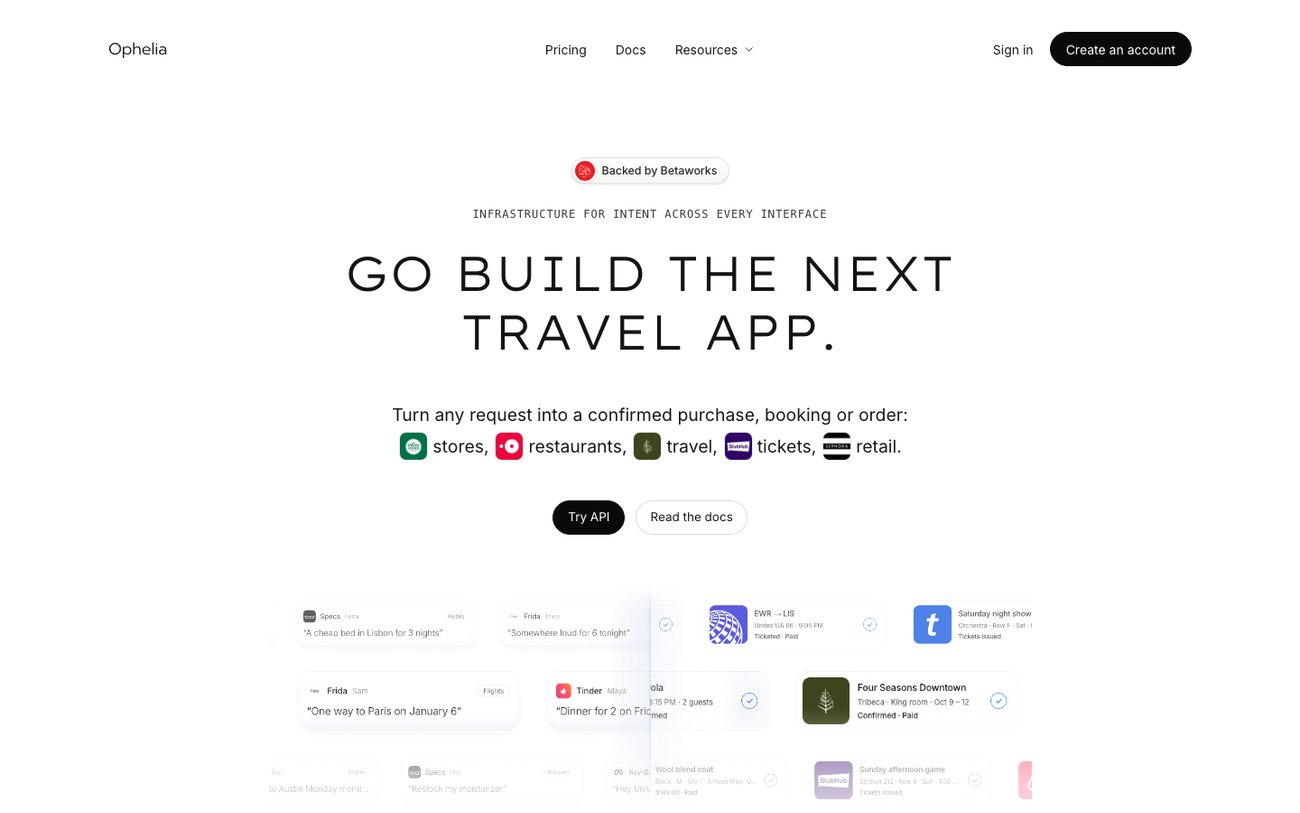
Founded by Bo Brainerd and Jorge Moreno, Ophelia is an API that lets any product with an LLM search, book, and buy, with every outcome confirmed and recorded. It handles the authorization, navigation, transactions, and reliability that agents need to turn a request into a completed action. Its customers are consumer software companies building AI-native products, from assistants and agent platforms to marketplaces and fintechs. The company says more than 5,000 requests have already been completed through its platform.
Brainerd, the CEO, worked cybersecurity and operations for 12 senatorial and presidential campaigns, at the White House and the DNC. Moreno, the CTO, built and scaled the ride-share team at Uber, leading API infrastructure development for 40 million US customers.
Intrinsic Labs
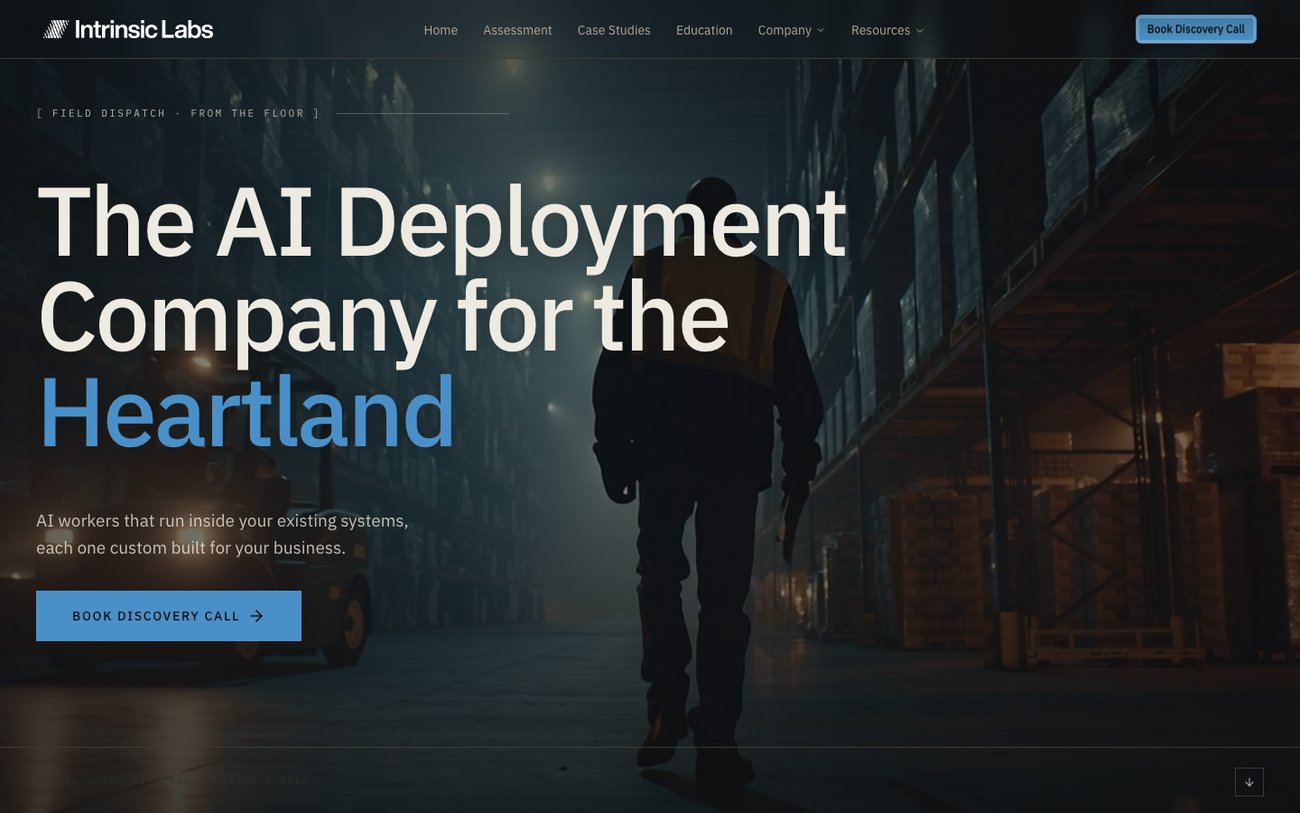
Intrinsic Labs turns an industrial company’s operating knowledge into AI workers that do the work. The agents run inside existing systems such as ERPs, TMS platforms, and CRMs. Forward-deployed engineers supply the talent these companies lack, then deploy, run, and improve the workers for them. Customers are industrial services, manufacturing, and construction companies doing $50M to $1B in revenue.
Cofounder Jon Slemp is a second-time founder with a prior exit and experience running tech-enabled services businesses. Cofounder Yon Raz-Fridman, who joined in April, is a serial entrepreneur with multiple exits across hardware and software. Intrinsic’s site cites results from customers including a 90% faster accounts-payable cycle at Colliers International and roughly 85% of manual entry removed at Metal Conversions.

X1 Wealth
X1 Wealth is an AI family office for families whose finances have become a second job. It pulls a family’s accounts, documents, and entities into one record the family owns, prepares upcoming work such as capital calls, K-1s, and deadlines, and acts only when the family approves, down to preparing a bank transfer. It works alongside the family’s CPA, attorney, and advisor, and connects to Claude and ChatGPT. The target customer is the family with a business, real estate, trusts, or equity compensation, and the professionals who serve them.
Cofounder and CEO Mat Silverstein spent ten years running growth, product, and technology at a firm that coordinated family-office work for entrepreneurs by hand. Jex Musa is cofounder. X1 offers a free tier, and charges $97 a month for membership and from $499 a month for professional workspaces. Author Garrett Gunderson built his Multiplier Family Office on the platform.
Blobfish
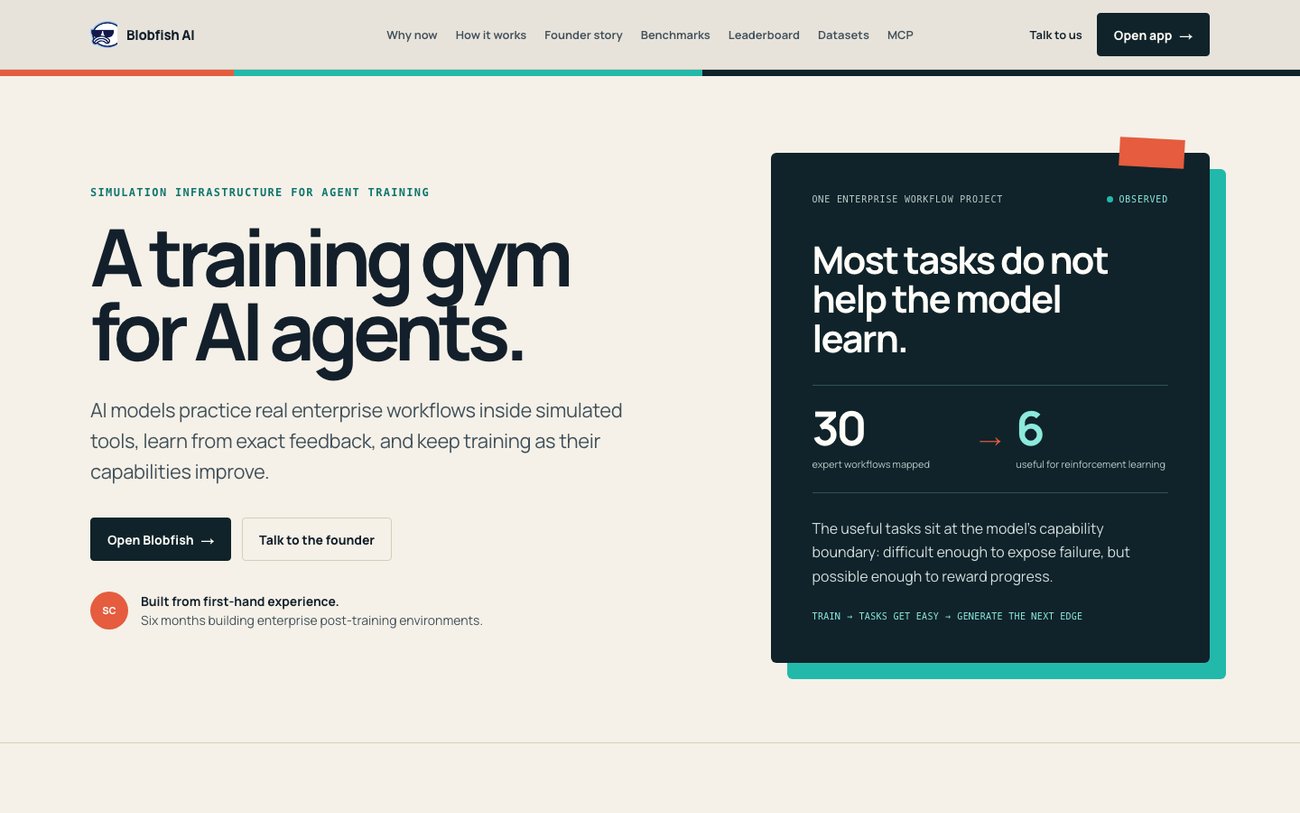
Blobfish builds training gyms for AI agents: simulated enterprise environments, with mock CRMs, ERPs, and spreadsheets, where models practice real workflows and are scored by deterministic verifiers. Think of it as a flight simulator for an AI employee. The pitch is specialized models that are cheaper, more accurate, and able to run on-prem. The company says it has generated 2,000 domain-specific environments and used them to train a 14-billion-parameter model that beat a much larger DeepSeek model on the MCP benchmark, an early internal result still awaiting broader evaluation.
CEO Samuel Chien built RL environments for xAI’s Grok Enterprise Post-Training team. Johnny Chien is CTO. Blobfish says post-training teams at Google DeepMind, SpaceXAI, and Alibaba, along with Mecka’s RL environment team, are reviewing the tasks it generated and giving feedback.
From seed-stage founders to Series C CEOs, AlleyWatch readers are building the future of NYC tech. Advertise today →
Heard
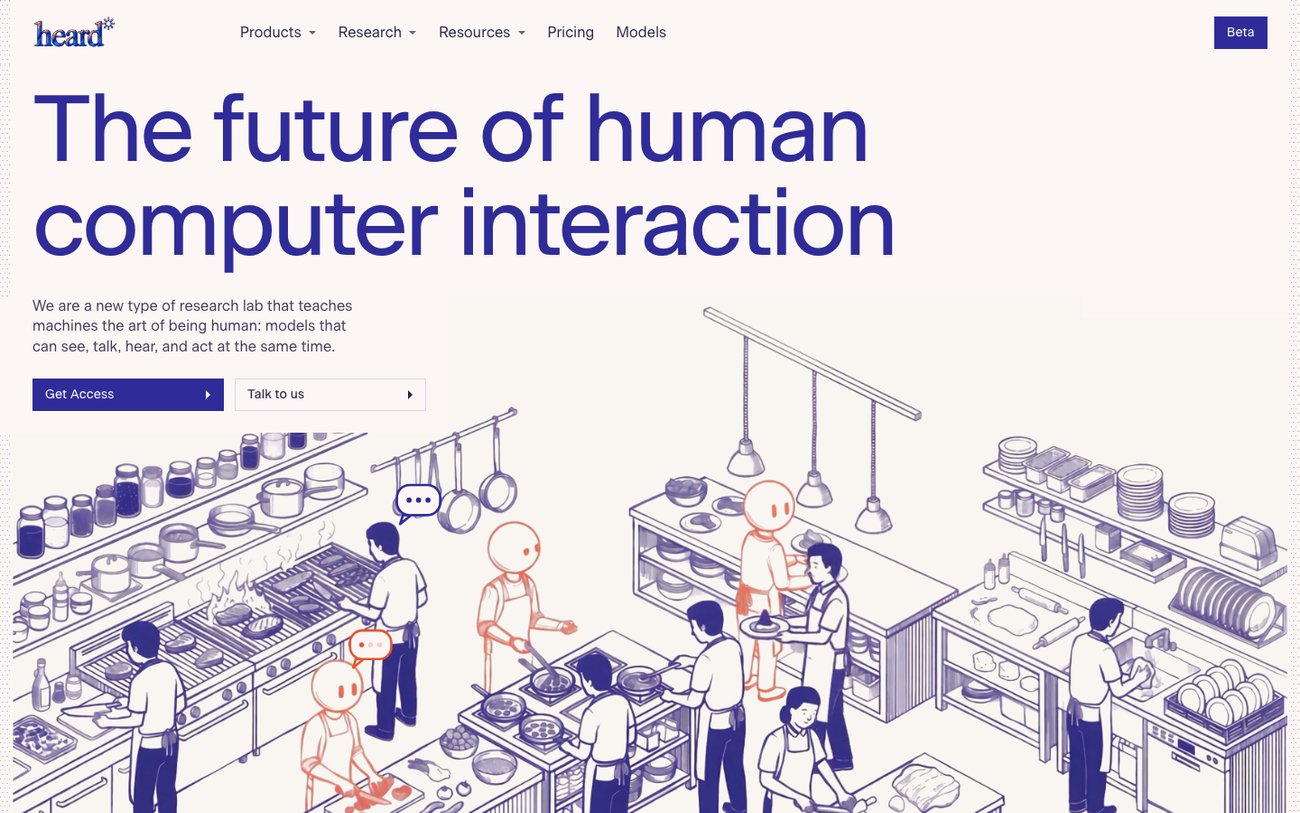
Heard is the voice context layer for agents. As each of us ends up working with dozens of agents, the thesis goes, we need a voice that knows what matters to us and what doesn’t. The company is building what it calls the next voice interface for a billion users. Its site describes full-duplex multimodal models that listen while they speak and see what the user sees, with early models in training or preview and integrations with Google Calendar, Slack, Gmail, Notion, GitHub, and Linear.
CEO Kelly Sun is a two-time founder, a former HCI researcher and a veteran of Deloitte and McKinsey.
yaven
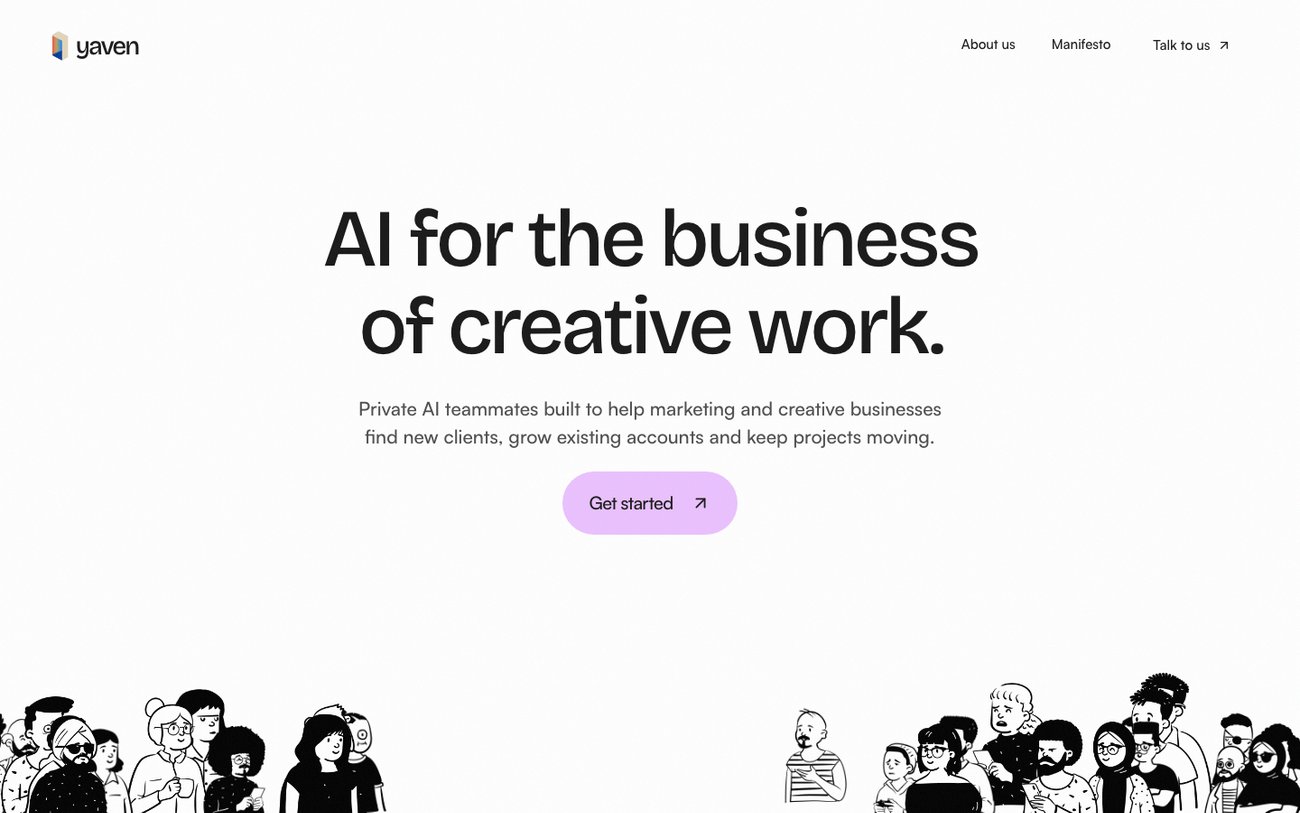
yaven builds AI teammates for companies of one. The Mac app lives in the notch or a keystroke away from any app, works out what an independent is trying to do, finds the next client and runs the work after the yes. It targets creative, design, marketing, and PR agencies, plus the freelancers and small studios turning into one-person companies. Context stays on the user’s Mac, it connects to 20+ tools, and nothing reaches a client without approval.
Cofounder and CEO Bettina Sosa is a design engineer from Imperial whose work has been exhibited at the Design Museum. She holds two Creative Conscience awards, has been a founding engineer twice and ran her own agency. Cofounder and CTO Nick Price went from Imperial to MIT, where he wrote a prize-winning thesis, deployed embedded AI at an early-stage startup, and built AI infrastructure for a hedge fund.
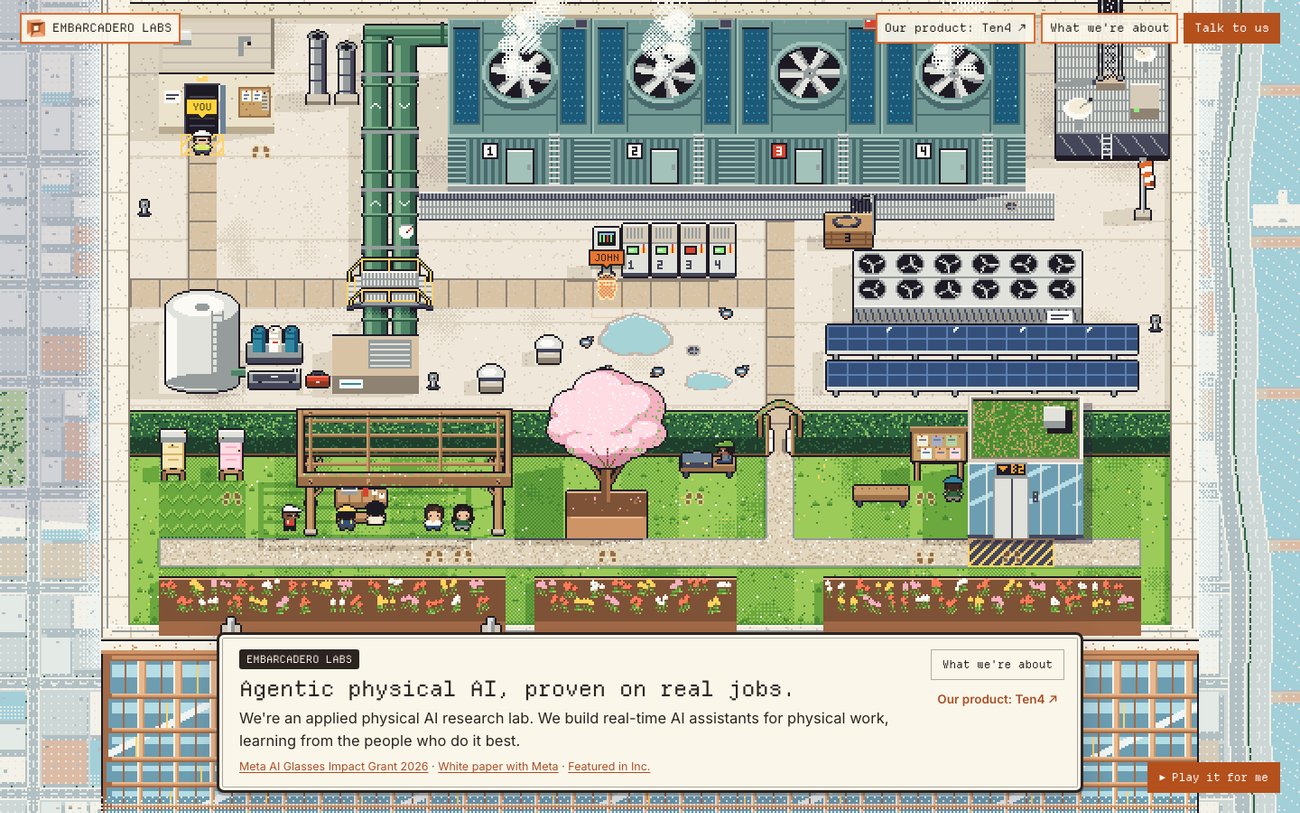
Embarcadero Labs
Embarcadero Labs is building agentic physical AI for frontline workers. Its product, Ten4, is an iOS app and cloud platform that works through a technician’s phone, Bluetooth mic, or smart glasses during the job. It weighs video, voice, and photos against the customer’s history, fills in the company’s own reports and forms, and links each answer back to the moment it came from. Every job feeds a knowledge graph of customers, sites, and equipment, so the next technician starts with what the last one learned. Early customers are HVAC, electrical, and other high-turnover trades servicing data centers.
CEO Lucas Cunha spent years implementing AI at Fortune 500 companies. CTO Dennis Nennos worked on early AR software at the world’s largest chemical manufacturer and researched computational physics at Harvard. The company’s site cites a 2026 Meta AI Glasses Impact Grant.
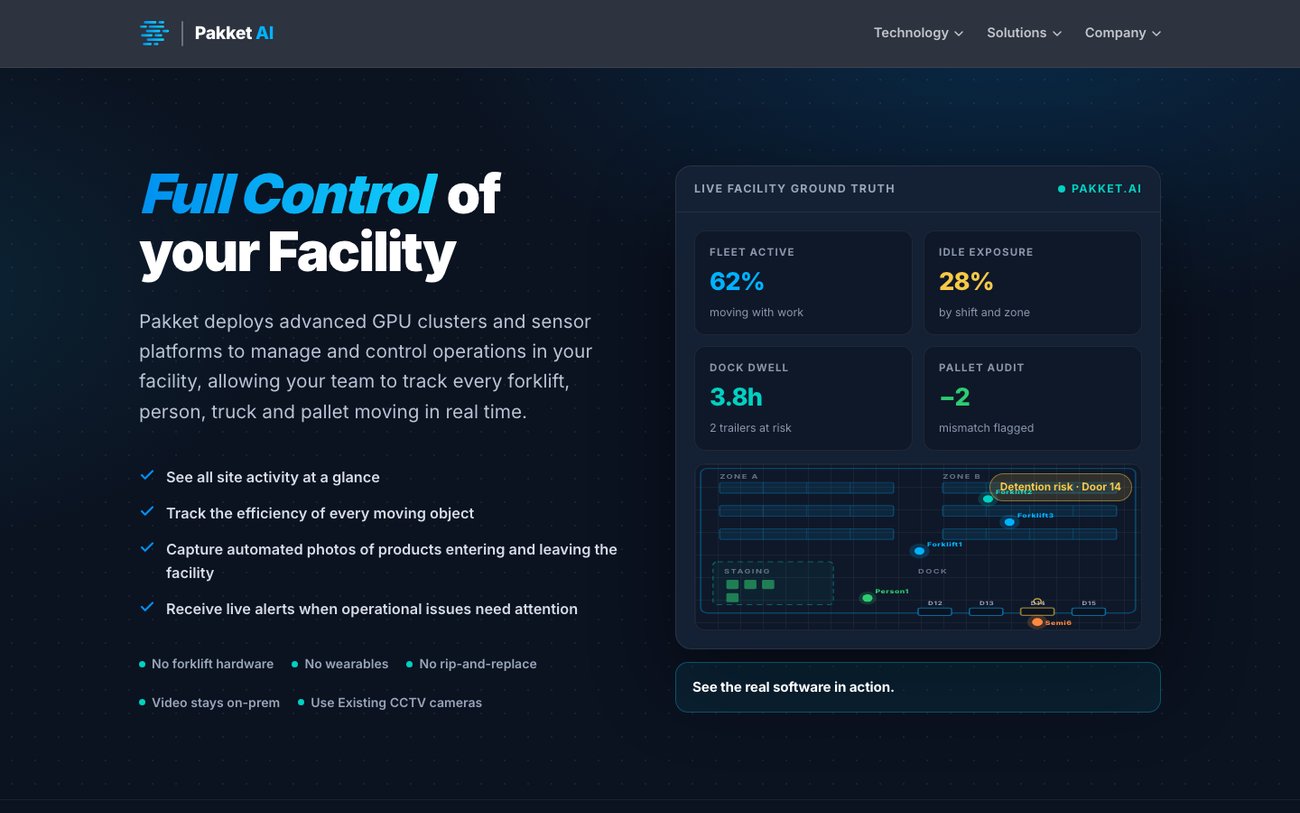
Pakket
Pakket is warehouse automation built on large vision models. It turns a warehouse’s existing cameras into a camera-based real-time location system, with no new hardware, giving live visibility into forklifts, docks, and dwell time, plus a live floor map and KPIs tied to financial performance. The pitch: most warehouses run at around 65% efficiency because they can’t see their own operations, which breeds errors and edge cases.
The founding team is CEO Dalton Dwyer, CTO Danick Desjardines, and CCO Jeff Huerta. Collectively they are three-time founders with one exit and ten years in warehouse robotics.