

America’s healthcare labor shortage has hardened into a structural crisis: health systems now spend $97B annually on contract and agency staffing largely because the credentialing and training pipeline that supplies clinical workers was never built to scale. Legacy trade schools compound the problem, operating under enrollment caps and manual workflows that cannot keep pace with demand while hospitals leave critical roles unfilled. Stepful attacks the root cause with a school-as-a-service model that lets health systems build and run their own talent pipelines, training entry-level and mid-career workers for high-demand roles like medical assistant, pharmacy technician, surgical tech, and LPN, plus degree programs in RN and respiratory therapy through its accredited college entity, St. Louis College of Health Careers. The platform handles everything from admissions and instruction to coaching and outcome tracking, and its employer-sponsored, debt-free pathways let workers move from a high school diploma to a healthcare career without leaving the workforce or taking on loans. The results validate the model: more than 32,000 graduates, an 89% certification rate, and partnerships with 35+ health systems including Mount Sinai, Ochsner, and Providence.
AlleyWatch sat down with Stepful CEO and Co-Founder Carl Madi to learn more about the business, its future plans, recent funding round that brings the company’s total funding to $105M, and much, much more…
Who were your investors, and how much did you raise?
This is our Series C: $55M, led by Oak HC/FT, with participation from new investors Foresite Capital, Hearst Ventures, and the Citi Impact Fund, alongside existing investors SemperVirens, Y Combinator, Intermountain Health, and ECMC Education Impact Fund. It’s a meaningful milestone, but what excites us more is what it unlocks: deeper health system partnerships, expanded program offerings, and the infrastructure to scale what’s working.
Tell us about the product or service that Stepful offers.
Stepful is a School-as-a-Service for healthcare employers. We partner with health systems to build and run their own talent pipelines – training entry-level and mid-career workers for high-demand clinical roles like medical assistant, pharmacy technician, surgical tech, LPN, and now degree programs like RN and Respiratory Therapy through our accredited college entity, St. Louis College of Health Careers.
We handle everything: admitting students, running the training program, coaching students through to completion, and tracking outcomes. Health systems get a steady, predictable pipeline of practice-ready talent without having to spin up a program from the ground up. Workers get an affordable, employer-sponsored pathway to a healthcare career, debt-free.
We’ve trained over 32,000 graduates and partner with more than 35 health systems, including Mount Sinai, Ochsner, and Providence.
What inspired the start of Stepful?
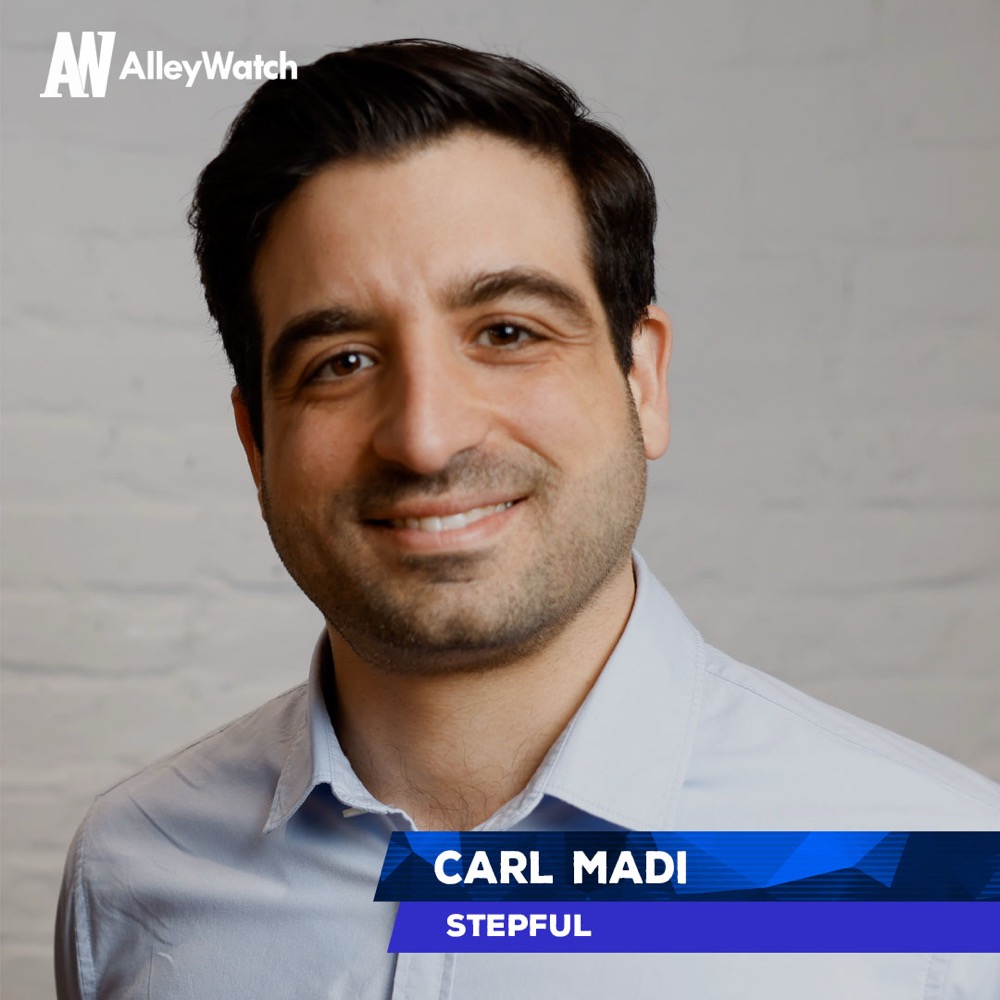 Stepful was founded during the pandemic. My cofounders Tressia Hobeika, Edoardo Serra, and I watched gig workers, people who had been driving for Uber, doing home services through Handy, lose their income overnight. These were hardworking people with real potential and no clear path forward.
At the same time, healthcare was screaming for workers. The shortage wasn’t new, but the pandemic made it impossible to ignore. Here was an industry desperately in need of people, and here were people desperately in need of careers, and there was no infrastructure to connect them efficiently.
We believed there had to be a better way: one that was fast, affordable, online, and built around what employers actually need. That’s what we set out to build.
How is Stepful different?
Most workforce solutions in healthcare operate like a staffing agency or a tuition benefit – a vendor relationship, not a pipeline. Health systems either rent talent from agencies at enormous cost or offer employees a tuition discount and hope they finish on their own.
We’re structurally different. We function as the health system’s own school – we own curriculum, delivery, coaching, and outcomes. Our students graduate and pass certification exams at rates well above the national average.
We also approach economics differently. As a tech-native school, we’re built to be profitable at scale, which means we can keep growing without subsidizing access at the expense of quality.
What market does Stepful target and how big is it?
Healthcare is the largest employer in the United States and faces a workforce shortage that will only deepen as the population ages and experienced workers retire. While we estimate the US healthcare training market to be $27B for the programs we’re targeting, health systems spend an estimated $97B annually on contract and agency labor.
Our opportunity extends across every healthcare employer that struggles to find and keep entry-level clinical workers – which is virtually all of them. Recently, our focus has been on partnering with the largest health systems that have the scale, the urgency, and increasingly the budget conviction to invest in building their own talent rather than renting it.
What’s your business model?
Employers pay us to train their employees or their prospective hires – we run the program, coach students, and deliver outcomes. Because we own the full stack (curriculum, platform, instruction, student success), we can offer better scale and program pricing.
On the B2C side, individuals can enroll directly into programs.
How are you preparing for a potential economic slowdown?
Healthcare is structurally resistant to downturns – people don’t stop needing care when the economy softens. If anything, budget pressure makes our model more compelling: a health system facing tighter margins has even more reason to stop spending on expensive agency labor and start building from within, quickly. Employer-sponsored programs allow people to continue filling these roles when people are struggling with affordability.
We’re also disciplined about unit economics and built a business that doesn’t require growth to be profitable.
What was the funding process like?
These are two of the most complex, regulated, and outcome-sensitive sectors in the economy. Most of the investors in this round had previously invested and seen the traction we’ve already achieved with the top US health systems.
The new investors who got excited quickly were ones who had seen how broken the pipeline is from the inside, either as healthcare operators or as investors who’d watched the space struggle, and who understood how we’ve built a regulatory and operational moat in the space.
Oak HC/FT’s deep healthcare expertise has been an amazing asset, and their alignment with our category thesis has made them an excellent partner.
What are the biggest challenges that you faced while raising capital?
The hardest thing to explain to investors unfamiliar with the space is why this problem hasn’t been solved already. Healthcare has enormous resources. Education has had decades of online innovation. The question we got repeatedly was: why now, why you?
The answer is that the technology to deliver high-quality, cohort-based, instructor-led training at scale has only recently become good enough, through leveraging AI, to produce outcomes employers trust.
What factors about your business led your investors to write the check?
Three things, I think. First, the numbers: 32,000+ graduates, 89% certification rate, 200%+ net dollar retention, and high gross margins. We’ve proven quality, scale, and strong unit economics, which is extremely rare in education. We grew graduates more than 3x last year and more than 4xed our enterprise bookings year over year last quarter. The market pull from these programs is real.
Second, the category insight: workforce development is an infrastructure problem, not an L&D problem. Leveraging the combined power of our software and programs, we’re able to meaningfully solve talent pipeline issues for health systems, rather than just creating an educational benefit or another band-aid.
Third, our regulatory moat. By acquiring an accredited institution, we can now offer degree pathways, significantly expanding the market and accelerating what would have taken us a decade to build from scratch.
What are the milestones you plan to achieve in the next six months?
Our focus now is on building new health system partnerships, expanding with our existing clients, and continuing to profitably grow our direct-to-consumer business. We’ll also be doubling down on investing in our learning platform, integrating more personalization with AI-integrations.
Our focus now is on building new health system partnerships, expanding with our existing clients, and continuing to profitably grow our direct-to-consumer business. We’ll also be doubling down on investing in our learning platform, integrating more personalization with AI-integrations.
What advice can you offer companies in New York that do not have a fresh injection of capital in the bank?
Build something where the unit economics work before you scale. We spent a long time making sure one cohort, one health system, one program was profitable and repeatable before we poured fuel on it. That discipline is what lets you survive a funding gap and builds investor confidence when you do go out to raise.
And be honest with yourself about what you’re actually solving. A lot of companies raise on a problem that exists but build a solution that doesn’t fit how the market actually buys. Talk to your customers obsessively, especially the ones who said no.
Where do you see the company going now over the near term?
We’re focused on deepening existing health system partnerships while selectively adding new enterprise clients. The college acquisition opens degree pathways we didn’t previously have, and we’ll be growing that side of the business meaningfully over the next year.
Longer-term, we believe Stepful will become the infrastructure layer for how large healthcare employers develop their entire workforce – from entry-level roles all the way through nursing leadership. The pipeline we’re building today feeds both ends of that ladder.
What’s your favorite spring destination in and around the city?
I love going to Jones Beach for day trips.